AI Law & Policy
Copyright and AI in 2026: What Courts Have Decided, and What Is Still Open
A careful, dated briefing on the biggest U.S. AI copyright developments as of November 2026: the Thomson Reuters appeal, the Anthropic settlement, and the still-undecided New York Times cases against OpenAI and Microsoft.
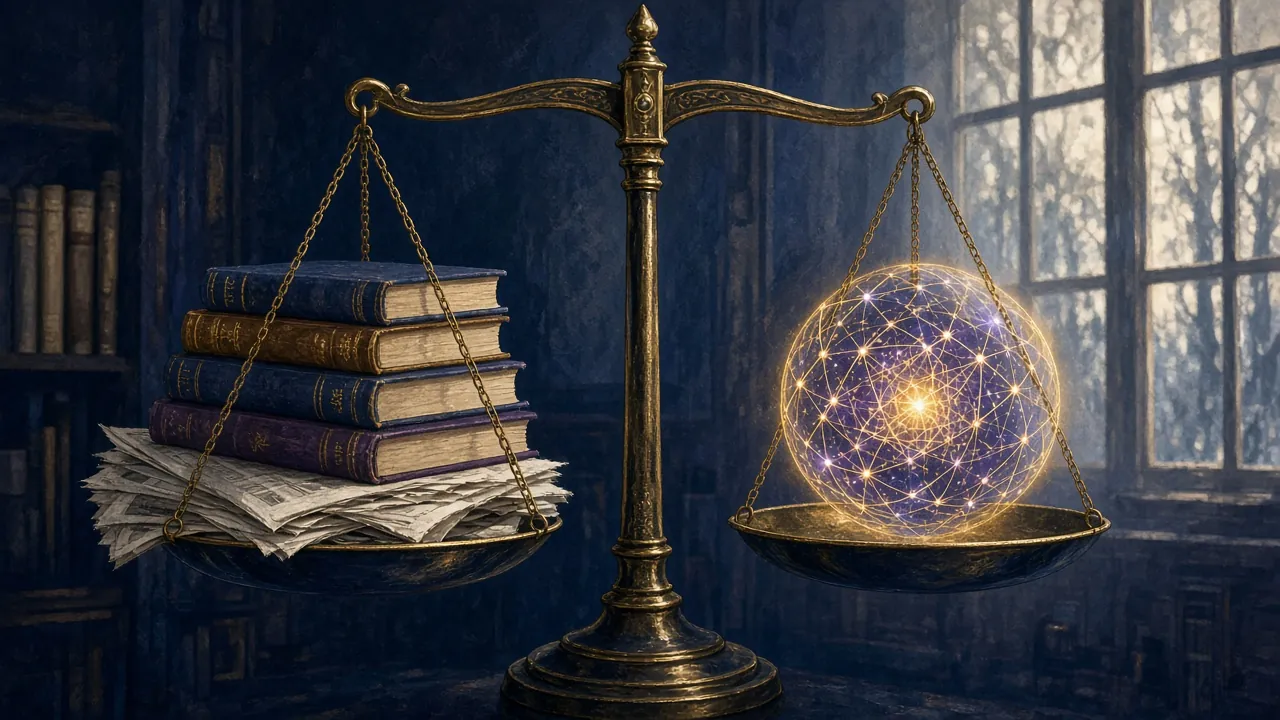
How to read this guide. This is a reporter-style explainer of public court developments as of November 10, 2026, not legal advice and not a prediction of how any pending case will end. Where a court has ruled, we say so and link a source. Where briefing is still underway, we say the question is open. Different cases turned on different facts; one opinion does not automatically decide the next.
By late 2026, U.S. courts had started to draw lines in the fight over whether companies may train AI systems on copyrighted works without a license. They had not drawn a single line. One appeals court had sided with a publisher in a non-generative legal-research case. A federal judge had found that training a generative model on lawfully obtained books could be fair use, but that building a library from pirated copies was not, and that case then settled for a very large amount of money. The most-watched generative-AI fight, brought by The New York Times and other publishers against OpenAI and Microsoft, still did not have a fair-use ruling.
If you remember only one thing, remember that split.
A decision that landed: Thomson Reuters v. ROSS, affirmed on appeal
In the long-running dispute between Thomson Reuters, the owner of Westlaw, and ROSS Intelligence, a lower court had held that Westlaw headnotes were copyrightable and that ROSS’s use of them to train a competing legal-research tool was not fair use. In 2026 the U.S. Court of Appeals for the Third Circuit affirmed that result. The court’s opinion is officially posted as No. 25-2153. Reuters reported the same outcome: the appeals court upheld Thomson Reuters’ win (Reuters, via Investing.com syndication).
Why this case is easy to over-read: ROSS was not accused of building a general-purpose chatbot that sometimes quoted news. It was accused of using a competitor’s editorial headnotes to train a rival legal-research product. Judges can treat a competing substitute in a tight professional market differently from a generative model that produces new text. The Third Circuit opinion is important, and it is not a blanket holding about every large language model.
A decision, then a settlement: Bartz v. Anthropic
Authors sued Anthropic over the training of its Claude models. In 2025, Judge William Alsup of the Northern District of California drew a now-famous distinction: training on books that had been lawfully obtained could qualify as fair use, but Anthropic’s practice of downloading and keeping millions of pirated books in a central library could not. Anthropic later agreed to pay $1.5 billion to settle the piracy claims. NPR reported on the court-approved $1.5 billion settlement in late July 2026 (NPR, 27 July 2026), and contemporaneous coverage in The Guardian (22 July 2026) described the approved resolution.
The settlement is one of the largest copyright resolutions on record. It is also easy to sloganize incorrectly. “A court said training is legal” leaves out the piracy holding. “Anthropic paid $1.5 billion, so training is illegal” leaves out the fair-use finding on the legally obtained books. Both halves happened. Anyone drafting a training-data policy should read them together, and should not assume the same math applies to a different company, a different dataset, or a different judge.
The question that is still open: the news cases against OpenAI and Microsoft
The New York Times sued OpenAI and Microsoft in December 2023, alleging that millions of its articles were copied to build ChatGPT and related products. That case, and a group of related publisher and author actions, now sit in multidistrict litigation in the Southern District of New York, In re OpenAI Copyright Infringement Litigation, before Judge Sidney H. Stein.
As of early November 2026, that court had not issued a ruling that training a large language model on news articles is, or is not, fair use. Public reporting through autumn 2026 described competing summary-judgment arguments — publishers saying the models are commercial substitutes for journalism, defendants saying training is a transformative use — and a large wave of amicus briefs as the briefing continued (Publishing Perspectives, November 2026).
Until Judge Stein rules, or a higher court does, claims that “U.S. law has decided news-article training” are ahead of the docket. The arguments are fully in view. The decision is not.
How to read the 2026 landscape without fooling yourself
- Facts matter. A legal-research tool trained on a rival’s headnotes, a generative model trained on purchased books, a generative model trained on a pirated shadow library, and a chatbot accused of substituting for a newspaper are four fact patterns. Courts have started to treat them as such.
- Fair use is a defense, not a vibe. It is decided case by case, with attention to the purpose of the use, the nature of the work, the amount taken, and the effect on the market for the original.
- Settlements are not nationwide rules. Anthropic’s payment resolved the claims in that class action on the terms the court approved. It does not automatically bind OpenAI, Meta, or a future defendant.
- Licensing and litigation now run in parallel. Some publishers have signed training-data deals; others are in court. That commercial split is part of the story, not proof that the legal question is finished.
This area will move again. When a summary-judgment opinion lands in the OpenAI MDL, or an appellate court takes up a generative-training case, this article should be updated. For the statutory side of 2026, see U.S. federal and state AI laws and the EU AI Act timeline.
Sources
- U.S. Court of Appeals for the Third Circuit, opinion in Thomson Reuters v. ROSS Intelligence, No. 25-2153
- Reuters report on the Third Circuit decision (Investing.com syndication)
- NPR, “Anthropic AI copyright infringement lawsuit isn’t a total win for authors,” July 27, 2026
- The Guardian, “Harry Potter publisher to receive millions in Anthropic copyright settlement,” July 22, 2026
- Publishing Perspectives, “Copyright Infringement Lawsuit Against OpenAI Draws More than 50 Amicus Briefs,” November 2026
Related reading
The EU AI Act in November 2026: What Is in Force, and What Is Not
A dated, official-source timeline of the EU AI Act as of November 2026, including the Digital Omnibus changes that delayed high-risk rules and added new deepfake prohibitions.
U.S. Federal and State AI Laws in 2026: A Map for Regular People
What actually changed in U.S. AI law by November 2026: California’s frontier-model and automated-decision rules, Colorado’s replacement statute, and a federal executive order that pressures states but does not write a national AI code.

AI Agents in 2026: What They Can and Cannot Reliably Do
A sober 2026 framework for AI agents that book, click, and call tools — useful jobs, failure modes, and the permissions you should not hand over unsupervised.