Robotaxis & AVs
What to Know Before You Ride a Robotaxi
A practical passenger checklist for robotaxi rides in 2026: how to confirm the service is driverless, what to do in an emergency, accessibility, data, and how official safety numbers should be read.
How to read this guide. This is general passenger advice, not a claim that Squadron Robot has completed rides in every city, and not a substitute for the in-app safety instructions of Waymo, Tesla, Zoox, or any other operator. If those instructions conflict with this page, follow the operator and local law.
A robotaxi ride can be uneventful in the way a good elevator ride is uneventful. The work is in the five minutes before the door closes: making sure you have the right car, the right kind of autonomy, and a plan if the trip does not go as expected.
1. Confirm what kind of ride you booked
“Robotaxi” is used, loosely, for at least three things:
- A rider-only vehicle with no human driver or monitor in the car.
- A vehicle with a safety monitor or safety driver still on board.
- A conventional ride-hail car whose driver is using an advanced driver-assistance system — which is not a robotaxi.
The app should tell you which of the first two you have. So should the car when it arrives. If a person is in the driver’s seat, you are not on a rider-only trip, even if the brand name on the app says “robotaxi.” For why this distinction matters by company and city, see where robotaxis operate in late 2026.
2. Check the geofence, airport rules, and hours
These services operate inside mapped areas, at stated hours, and sometimes with extra limits at airports or stadiums. A city’s name on a press release is not a promise that the car will drop you at a particular terminal. Open the official map in the app before you promise someone a pickup time.
3. Walk through the emergency and customer-support controls before you need them
Every serious operator puts a way to pull over, contact support, or speak to a remote agent in the app and usually on a screen in the car. Find that control while you are parked, not after you are confused on a highway shoulder. Read the posted guidance on:
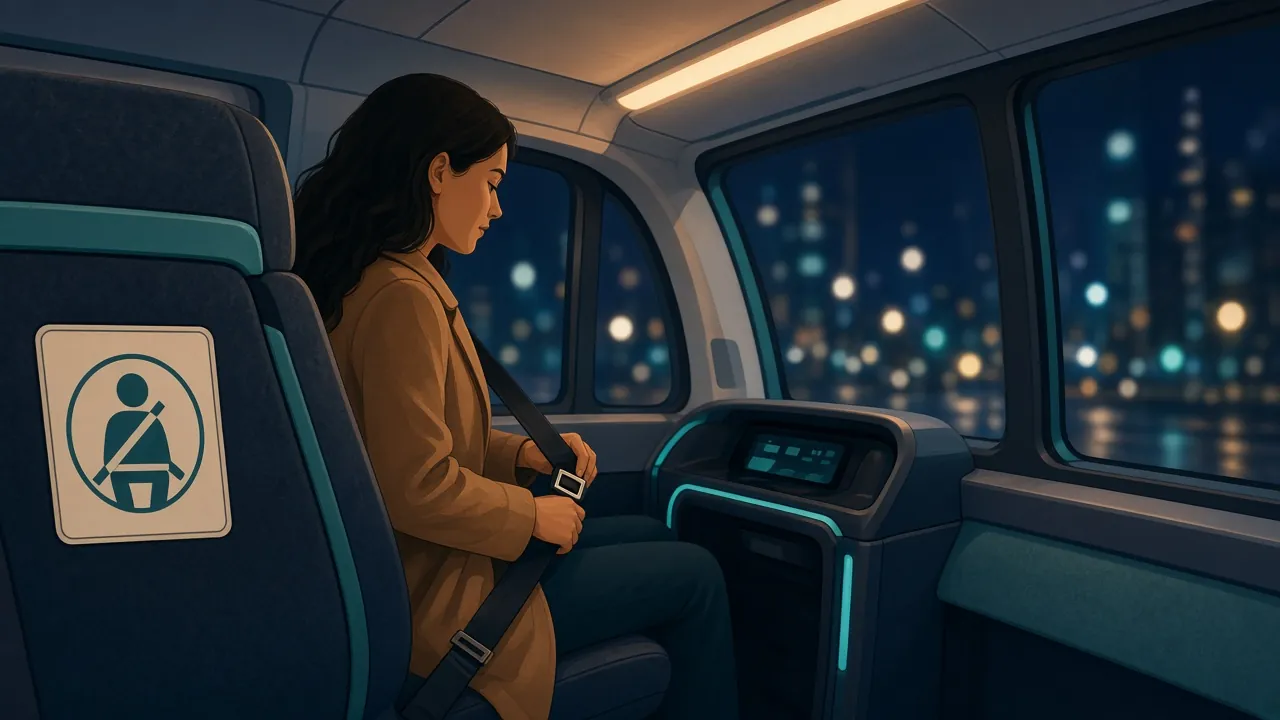
- How to fasten a seat belt. Some operators will not start, or will nag, until you do. Wear it.
- What to do if the vehicle stops in the travel lane.
- How first responders are supposed to interact with the car. Tesla, for example, publishes a first-responder interaction plan among its official robotaxi documents.
- Whether you should exit, stay, or wait for instructions after a collision.
If you cannot find an emergency control, do not treat that as a quirky UX problem. Choose another ride.
4. Accessibility, kids, pets, and luggage are still operational details
Purpose-built vehicles and modified passenger cars have different door heights, wheelchair policies, child-seat rules, pet rules, and cargo space. None of those should be guessed from a photo of a sleek cabin. Check the operator’s rider help pages. If you need a child seat or a wheelchair-accessible vehicle, confirm it in the app rather than hoping the arriving car happens to work.
5. Your ride produces data
Cameras and other sensors are how these vehicles drive. They also record the cabin or the exterior, depending on the operator and the configuration. Read the official privacy notice in the operator’s app and legal pages, and assume a trip may be reviewed after an incident. Tesla also publishes a first-responder interaction plan among its official robotaxi documents. If you need a conversation to stay private, a robotaxi is a poor place for it, just as a conventional taxi can be.
6. How to read a safety statistic without being naive or dismissive
Waymo’s official Safety Impact hub reports large percentage reductions in certain crash types compared with human benchmarks, based on 271.3 million rider-only miles through June 2026, and it publishes its methods. Those figures are a genuine public resource. They are also:
- Limited to the locations and road types in the study (the public tables emphasize surface streets in the areas with enough miles).
- Produced by the operator, using choices about which human crashes to compare.
- Not a guarantee about the next mile in a new city, or about a different company’s stack.
The healthy stance is to read the methodology, not to ignore the data, and not to treat a marketing percentage as a personal immunity. No published rate replaces seat belts, sober riding, or your own judgment if a vehicle is behaving strangely.
7. If something feels wrong, treat it like any other vehicle
You can request a stop, contact support, or — if you are in genuine danger — get out when it is safe to do so and call local emergency services. A robotaxi is still a heavy object in public space. Courtesy to pedestrians and to other drivers still applies; you are the passenger, but you are not a spectator if the car is stopped dangerously.
The technology is no longer science fiction in the cities where it actually operates. The passenger habits that make a ride boring, in the best sense, are still very human: the right app, the right car, a buckled belt, and a plan for the exception.
Related reading

Where Robotaxis Operate in Late 2026 — and How the Services Differ
A careful November 2026 snapshot of U.S. robotaxi services: what Waymo publishes officially, what Tesla and Zoox publicly operate, and why a city list is not the same as a fully driverless ride.

AI Agents in 2026: What They Can and Cannot Reliably Do
A sober 2026 framework for AI agents that book, click, and call tools — useful jobs, failure modes, and the permissions you should not hand over unsupervised.

Will AI Replace Game Artists and Writers? A Grounded 2026 Look
A clear-eyed 2026 take on AI tools and game-industry craft: what official toolchains actually do, where the legal and labor questions sit, and why ‘replacement’ is the wrong frame.