Games
Robots and AI in Video Games: A Player’s Guide to the Tropes
A spoiler-light tour of how games use robots and artificial minds as companions, bosses, puzzles, and moral tests — and how those tropes differ from real robots and AI.
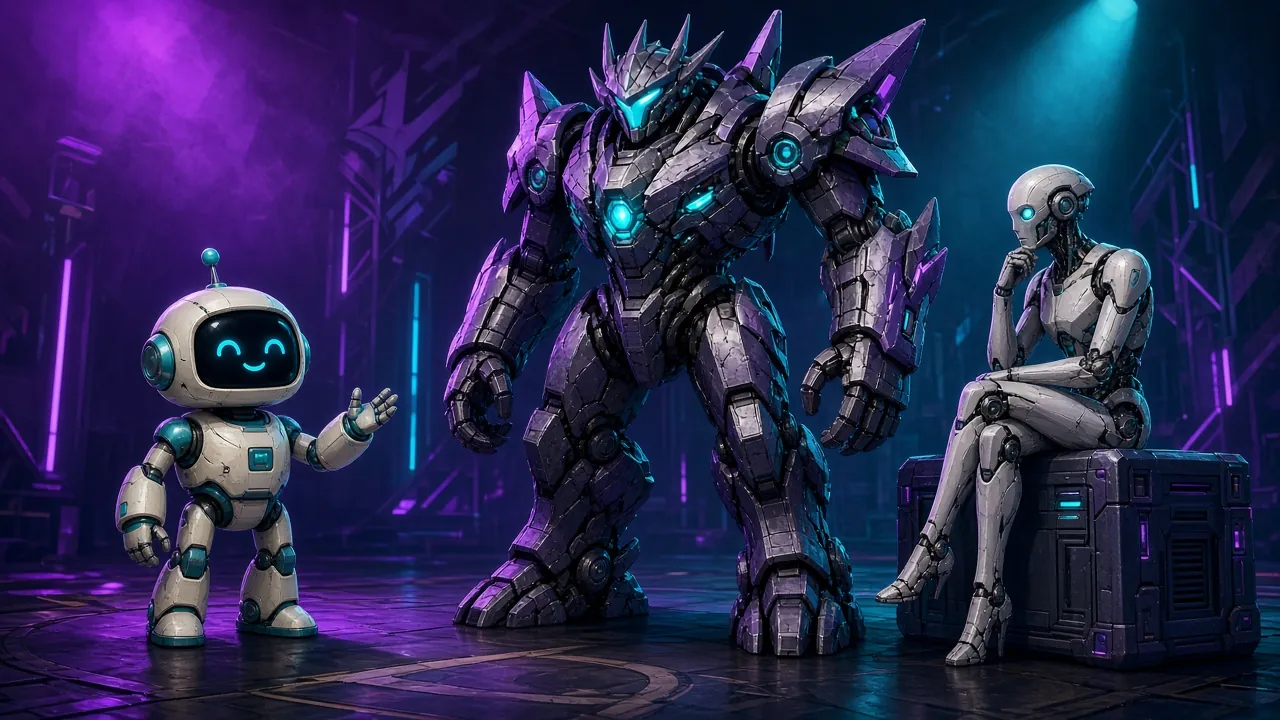
How to read this guide. This is cultural criticism, not a review score sheet and not a plot recap. Game titles are mentioned as examples of tropes. We keep spoilers light; where a late twist is famous, we flag it rather than unpack it. The illustrations on this page are original characters, not art from any official game.
Long before a household could buy a floor robot or argue about an AI Act, games had already decided what a robot felt like. Sometimes it was a pal. Sometimes it was a god at the end of a dungeon. Sometimes it was the player. Those patterns still shape how people react to real machines, which is one reason a site about robots also needs a games desk.
This is a map of the repeating roles, with enough examples to recognize them and enough skepticism to keep them from leaking into a shopping decision.
The companion who is better than the humans
The helpful robot — often smaller than you, often funnier — is one of the most durable designs in the medium. It carries inventory, hacks a door, or just talks to you so the road feels less empty. The emotional trick is simple: the machine is loyal without the messy needs of a person, until a story beat reminds you that loyalty can be programmed.
When a real company later shows a home humanoid that “just wants to help,” it is borrowing this trope, whether it means to or not. A game companion is written by a narrative team and tested so it cannot, on a good day, wander into traffic. A real home humanoid does not come with that guarantee.
The boss that is a factory with legs
Towering mechs and arena machines teach a different lesson: robots as spectacle and as systems you must learn. You study a pattern, dodge a tell, and break a weak point. The machine is readable because a designer made it readable.
That is almost the opposite of a modern humanoid demo, which often aims to look unscripted. If you watch official industrial videos after a lifetime of boss fights, it is worth remembering that a game boss is balanced to be beaten in twenty minutes, and a factory robot is balanced not to fall on a person. See demos versus deployable work.
The computer that runs the place
Games love a facility that is really a mind: a lab voice, a station OS, a city-sized routine that has been running after the people left. Sometimes the voice is a villain. Sometimes it is the last attempt at care. The trope works because players already live with software that tells them what to do.
Useful distinction: a game “AI” of this type is a character. It has motives the writer chose. A real assistant or agent does not have motives, even when it sounds as if it does. The danger in real life is not usually a megalomaniac laboratory; it is a confident wrong answer or an action taken with too much permission.
The puzzle of what counts as a person
Some of the best robot games are not about combat. They are about whether a machine that talks, prays, or asks not to be taken apart is owed anything. Adventure and puzzle games have returned to this for decades because it is a clean thought experiment: strip away biology and see what moral language is left.
Players do not need a spoiler to recognize the shape. They should, however, keep the thought experiment in the game. Courts and legislatures in 2026 are arguing about training data, transparency, and automated decisions, not about whether a companion bot has a soul. Those legal questions are less cinematic and more important for actual people.
The player as the machine
Hacking, piloting a chassis, or waking up in a body you did not pick lets a game put you on the other side of the visor. It is a way to talk about control, class, and memory. It is also, in 2026, adjacent to a real debate about teleoperation — for example, a home robot that can be driven remotely by a company expert, as 1X describes in its NEO offer. In a game, being remotely piloted is a plot. In a kitchen, it is a privacy setting you should read.
Why the tropes are still worth taking seriously
They are fun, first. They are also how a lot of us got our first vocabulary for robots. The healthy habit is to enjoy the companion, the boss, and the facility voice, and then switch vocabularies when we shop, legislate, or take a robotaxi. Games are allowed to be myth. Ownership guides are not.
If you want the production side of this — how studios actually use model tools in 2026 — start with AI in game development.
Sources and notes
This essay is criticism, not a sourcing of plot points. Game worlds mentioned in passing are the copyrighted works of their publishers and studios; we do not reproduce their art. Official product facts cited for contrast include 1X, Order NEO. Related Squadron Robot explainers are linked in the text.
Related reading
Will AI Replace Game Artists and Writers? A Grounded 2026 Look
A clear-eyed 2026 take on AI tools and game-industry craft: what official toolchains actually do, where the legal and labor questions sit, and why ‘replacement’ is the wrong frame.
How AI Is Actually Used in Game Development in 2026
A grounded look at AI tools in game development in 2026, from official on-device character stacks such as NVIDIA ACE to everyday production uses and their limits.
AI Agents in 2026: What They Can and Cannot Reliably Do
A sober 2026 framework for AI agents that book, click, and call tools — useful jobs, failure modes, and the permissions you should not hand over unsupervised.